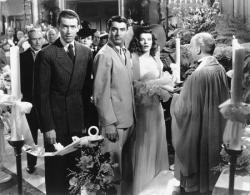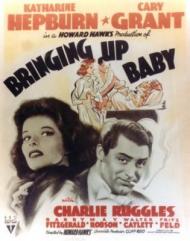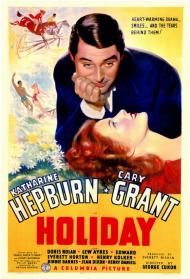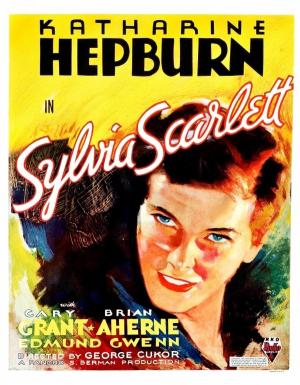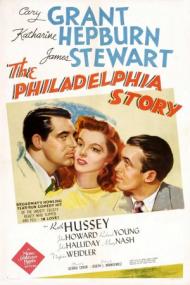



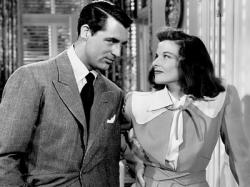
After a blockbuster start to her movie career in the early thirties Katharine Hepburn seemed to have run out of gas by 1936. She was labeled box office poison and after a string of flops (including what is now considered to be one of the greatest comedies of all time Bringing Up Baby) took her wounded pride back to the stage in New York. She had immediate success with The Philadelphia Story and was smart enough to use it as a means of reconquering Hollywood. With her pal George Cukor directing and the impressive combination of Cary Grant and Jimmy Stewart as her co-stars, she hit a home run and remained on top in the picture business for the next half a century.
More romantic comedy than screwball farce, The Philadelphia Story covers roughly twenty-four hours in the life of the Lord family, sitting at the pinnacle of Philadelphia society. Eldest daughter Tracy (Hepburn) is preparing for her second marriage. While her first was to the equally rich and charming C. K. Dexter Haven (Grant) this time around she is marrying a man of the people, a Mr. George Kittredge (the wooden John Howard) who has pulled himself up by his bootstraps. Meanwhile father Lord has put the family in an embarrassing situation through his philandering with a young showgirl. Spy Magazine threatens to spill the beans unless the Lords allow them to send a reporter and photographer to cover the nuptials.
For the second time in 1940 Cary Grant plays a husband bent on reconciling with his ex-wife. Although unlike his character in His Girl Friday C. K. Dexter Haven is a true gentleman. He knows the spoiled and strong-willed Tracy better than she knows herself. Still his screen-time is limited. Both Hepburn and Stewart have juicier roles.
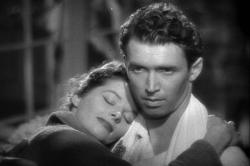
Stewart, as reporter Macaulay Connor, sinks his teeth into his role as the man who gets drunk with Tracy on the eve of her 2nd marriage and spends a rather suggestive evening with her and the swimming pool. He teaches her to let her guard down and to trust her heart by treating her as a passionate woman and not an austere goddess. My favorite line is when he tells her she has "Holocausts and hearth fires" in her. Hepburn, for her part, perfectly exemplifies the intelligent, brittle and judgmental society darling with an inner goodness. By the final credits she is a changed woman.
Other amusing characters include a precocious younger sister, a lecherous uncle and the lady photographer in love with Connor.
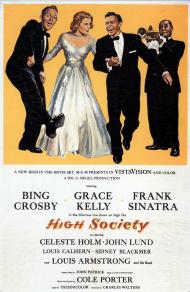
Remade as a musical in the fifties, The Philadelphia Story is a landmark movie featuring three of the greatest stars ever to light up the screen. When the AFI recently did their list of the top male and female movie stars of all time, Katharine Hepburn topped the list for women and Cary Grant and James Stewart were numbers 2 and 3 respectively on the men's list. Now that's star power.