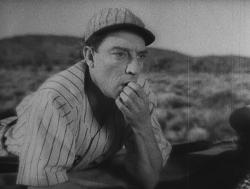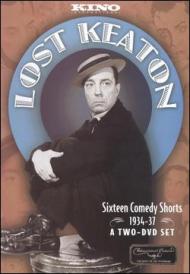



After a successful silent film career, Buster Keaton found himself in two reelers and supporting roles in sound pictures. Although a 19 minute talkie, One Run Elmer works very much like a silent film. Keaton only has a handful of lines and several great stunts. Even in middle age the guy still had amazing control of his body and could throw himself around with the agility of an 18 year old gymnast.
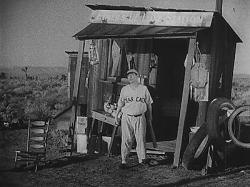
Elmer owns a lonely gas station in the middle of the desert. Other than the road that runs in front of it, there is not another sign of life in sight. One day some men arrive and build a brand new gas station directly across the street, run by a tall guy named Jim. Elmer and Jim compete for every customer who stops. When an attractive woman stops they ask her to come to their baseball game. Jim plays for the Rattlesnakes and Elmer plays for the Bear Cats.
After the woman drives off, the two men have practice across the street, with Elmer's station getting the worst of it. At first they play catch and then pitch to each other. Elmer ends up hitting a ball that breaks the window of a passing car.
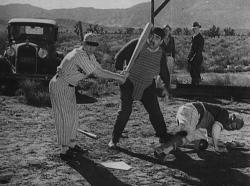
Later at the game, Elmer plays catcher, while the man whose car window he broke is the umpire. He clearly holds a grudge as the first two pitches are perfect strikes but he calls them balls. The game plays as you would expect from Keaton. Bats get broken, people cheat, including Elmer who puts a bullet inside his bat.
Buster Keaton was a huge baseball fan. He played it in the summers of his youth as well as at his studio when not making movies. Look closely at the long haired second baseman behind the Rattlesnake's pitcher. It is sports legend Jim Thorpe, who after sports took to playing extras in movies, mostly in westerns. According to one story, when Keaton realized Thorpe was playing an extra, he asked that the director give him an extra scene. True or not, Thorpe is given a scene where he catches the ball, does a horrible take, and then relays the ball to the catcher who gets a face full of Keaton's feet.
Films like One Run Elmer show that Buster Keaton never lost his slapstick touch, even when sound came. He was the master of the prat fall but he was never able to perfect the art of the line delivery. Sound was here to stay and audiences moved on without him,