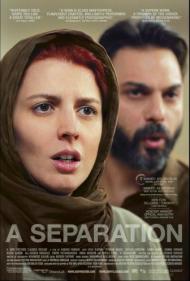



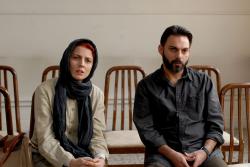
A Separation is a gripping family drama from Iran. Already the recipient of dozens of awards, including the Golden Globe for Best Foreign Language film, it has also been nominated for not only the Foreign Language Oscar, but also the Academy Award for Best Original Screenplay. Besides being a well made film, deserving of the accolades, it also provides a glimpse into the everyday life of a country the Western world rarely sees.
It tells the story of a clash between two families. Nader and Simin are a middle class Iranian family going through marital difficulties. Simin wants to leave the country so that their daughter, Termeh, won't have to grow up there, but her husband, Nader won't leave his father who is suffering from Alzheimer's. After Simin moves out of the house and back in with her parents, Nader hires a woman to come in during the day to care for his father.
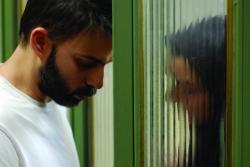
The woman he hires, Razieh, is poor and more religious than Nader and Simin. Before cleaning up Nader's father, she must first check that it won't be a sin. Her husband, Hodjat, is in debt and has been in and out of jail. One day when Nader comes home to find his father alone in the house and tied to the bed, he becomes angry with Razieh and physically throws her out of his house. Razieh is pregnant and when she loses the baby, Nader is charged with murder under Iranian law since she was more than 4 and a half months along.
As someone used to American courtrooms, seeing the Iranian legal system in action is quite the culture shock. The legal proceedings are chaotic by comparison. Instead of a courtroom and a jury, the case is heard in a cramped and overheated office in front of a judge. No lawyers are present and rather than a formal, present the case and then defend it procedure, it seems to consist entirely of the accused and the defendants yelling as loud as they can at each other. Witnesses are called in as they are mentioned during the case and trips are made to the scene of the crime under less than clinical conditions.
If the legal scenes show the differences of life in Iran then the family ones show that relationships are the same all over. Nader and Simin's arguments aren't very different from any Western couple's marital spats. Eleven year old Termeh is caught between her parents. She is put in an awkward spot by her father's legal troubles as well as by being used as a weapon in her parent's divorce.
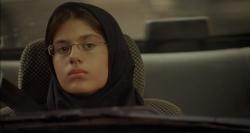
The cast is all around terrific. Sareh Bayat as Razieh and young Sarina Farhadi (the daughter of the director) as Termeh do particularly good work. It is all played very realistically and never goes over the top no matter how high the drama gets.
If there is any weakness to the story, it is perhaps that it runs a bit long. At just over two hours, there is some room for tightening. That's a minor quibble though and I hardly mean that it needed to be edited ruthlessly. It's just that the story really picks up after Nader and Razieh have their argument and it does take a little while to reach that point.
I find it interesting that a foreign language film would get a Best Screenplay nomination. The story is the same in any language, but how many Academy members who watch it will understand it in its original language? That puts a lot of pressure on the translation of the subtitles.